
 5 out of 5 on

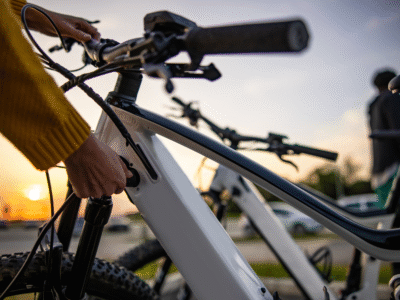
California has long been a hub for cycling innovation and advocacy, and its newest legislation reflects the state’s commitment to safer streets for everyone. In 2023, the California OmniBike Bill (AB 1909) went into full effect.
For residents and commuters in Santa Barbara, a city increasingly designed around micromobility and sustainable transportation, understanding these changes is not just helpful; it is essential.
These new rules influence everything from how drivers must behave near cyclists to how injured riders may pursue legal claims after a crash.
At NordstrandBlack PC, we represent injured cyclists in complex California bicycle accident claims, staying up to date on evolving state and local laws to make sure your rights remain protected.
What Is the California OmniBike Bill?
Signed into law in 2022 and fully effective as of January 1, 2023, Assembly Bill 1909, known as the OmniBike Bill, made four major updates to the California Vehicle Code that directly affect cyclist safety.
Drivers Must Change Lanes to Pass Cyclists (When Possible)
Previously, drivers had to leave at least three feet of space when passing a bicycle. Under the new cyclist right-of-way law, however, drivers are now required to move into another lane when available to safely pass a cyclist—much as they would when passing a slower vehicle.
This rule significantly improves visibility and space for cyclists, especially in urban areas like Santa Barbara, where narrow roads and multi-use lanes are common.
Local E-Bike Restrictions Are No Longer Allowed
Cities and counties can no longer enforce local bans on e-bikes riding on bike paths or trails that are otherwise open to traditional bicycles. This provision standardizes where e-bikes can be used, removing the confusion caused by differing local ordinances.
It also ensures greater equity for commuters using Class 1 and Class 2 e-bikes, especially in a region like Santa Barbara, where hills and long distances often make e-bikes a practical choice.
Cyclists May Cross with Pedestrian Walk Signals
Previously, cyclists were required to follow only traffic lights for vehicles. Now, cyclists may legally cross intersections during pedestrian walk signals, aligning their rights with those of pedestrians and reducing wait times and confusion at intersections.
This is especially relevant in areas like downtown Santa Barbara and other walkable neighborhoods where signalized intersections are common.
Bicycle Licensing Requirements Are Eliminated
The new law prohibits local authorities from requiring bicycle licenses, simplifying the legal obligations for riders and encouraging broader cycling participation.
How the OmniBike Bill Affects Personal Injury Claims
Laws don’t just define the rules of the road; they establish the standards of care used in legal cases. That means these new California bike laws have direct implications for bicycle accident liability.
Enhanced Driver Responsibility
With the updated requirement to change lanes to pass, any driver who fails to do so and causes an accident may be liable for violating the Vehicle Code. This new duty of care can play a key role in proving negligence in a California bicycle accident claim.
For example, if a driver clips a cyclist because they passed too closely without changing lanes, that action now clearly violates the law and strengthens the injured cyclist’s case.
Greater Protections for E-Bike Riders
The removal of local e-bike bans helps e-bike riders legally operate in areas where they previously risked tickets or confusion. If an e-bike rider is injured on a multi-use path that’s now legally accessible, this can bolster their claim and reduce arguments of assumed risk or illegal use.
At NordstrandBlack PC, we have seen an uptick in e-bike accident claims. Legal clarity from the OmniBike Bill is a welcome change that empowers both riders and attorneys.
Crosswalk Conflicts and Right-of-Way
Allowing cyclists to cross with walk signals reduces the gray area around who had the right-of-way during a crash. If a cyclist is legally crossing at a crosswalk while the pedestrian signal is active, drivers must yield. A failure to do so can now be more clearly treated as driver negligence, simplifying liability determinations in crash cases.
Urban Planning and SB 932
The OmniBike Bill is part of a broader push to improve cycling infrastructure in California. Another related law, SB 932, requires cities and counties to include safe and connected bike lanes in their general plans starting in 2024. This legislation ensures that bike safety isn’t an afterthought but a core part of future road development.
Santa Barbara, with its forward-thinking approach to bike-friendly infrastructure, is already ahead of many regions. But as laws evolve, so must public awareness and enforcement practices.
What Motorists Need to Know
For drivers in Santa Barbara and beyond, these legal changes come with greater responsibility toward cyclists. Here’s what you should do to stay compliant:
- Always change lanes when passing a cyclist if safe to do so.
- Watch for cyclists using pedestrian walk signals, especially at downtown intersections.
- Be mindful of e-bike riders, who now have greater legal access to bike paths and lanes.
- Recognize that violating these laws could not only result in tickets—but also make you liable in a personal injury lawsuit if an accident occurs.
What Cyclists Should Keep in Mind
While the OmniBike Bill strengthens legal protections for cyclists, it is still crucial to ride defensively and understand your responsibilities. If you are ever involved in an accident, seek medical attention immediately, file a police report, and consult a personal injury attorney with experience in California bicycle accident claims.
Were You Injured in a Cycling Crash?
At NordstrandBlack PC, we are proud to support the cycling community in Santa Barbara and beyond. Our attorneys understand the legal nuances of the California OmniBike Bill 2023, cyclist right-of-way laws, and how recent changes affect your right to compensation after a crash.
We handle complex cases involving cars, e-bikes, unsafe intersections, and driver responsibility toward cyclists—and we do so with the experience, compassion, and tenacity your case deserves.
Speak With One of Our Trusted Bike Accident Lawyers in Santa Barbara Today
If you or a loved one has been injured in a bicycle accident, do not wait to understand your rights under the new California bike laws. The legal landscape is changing, and our firm is here to guide you through it.
Call our Santa Barbara bike accident lawyers today at (805) 962-2022 to schedule a free consultation. Let us help you get the compensation you need—and the accountability you deserve.